
Training 3 min read
A Home Workout in Nepal Without Gym Equipment
Start a simple home routine with bodyweight exercises, walking and gradual progression, with options for small rooms and busy days.
Published Updated By The Fitness Court
A small clear space and a repeatable schedule are enough to begin moving more at home. Bodyweight training can help you practise strength movements, while walking adds activity outside the session. Choose options that suit your current ability rather than trying to copy an advanced video on your first day.
Make the space workable
Clear the floor and check that any chair or support is stable and will not slide. Avoid improvised pulling exercises from doors, railings or furniture that may not hold your weight. Choose shoes and a surface that give you secure footing.
Start with a short warm-up such as easy marching and gentle practice repetitions. If you have an injury, symptoms or a condition that affects exercise, ask a qualified professional how to adapt the routine.
Try a short beginner circuit
The following is a starting example for healthy adults. Try one comfortable round first, then add a second if you recover well. Rest between exercises as needed and stop each set before you lose control.
- Chair sit-to-stand: try 6–10 controlled repetitions.
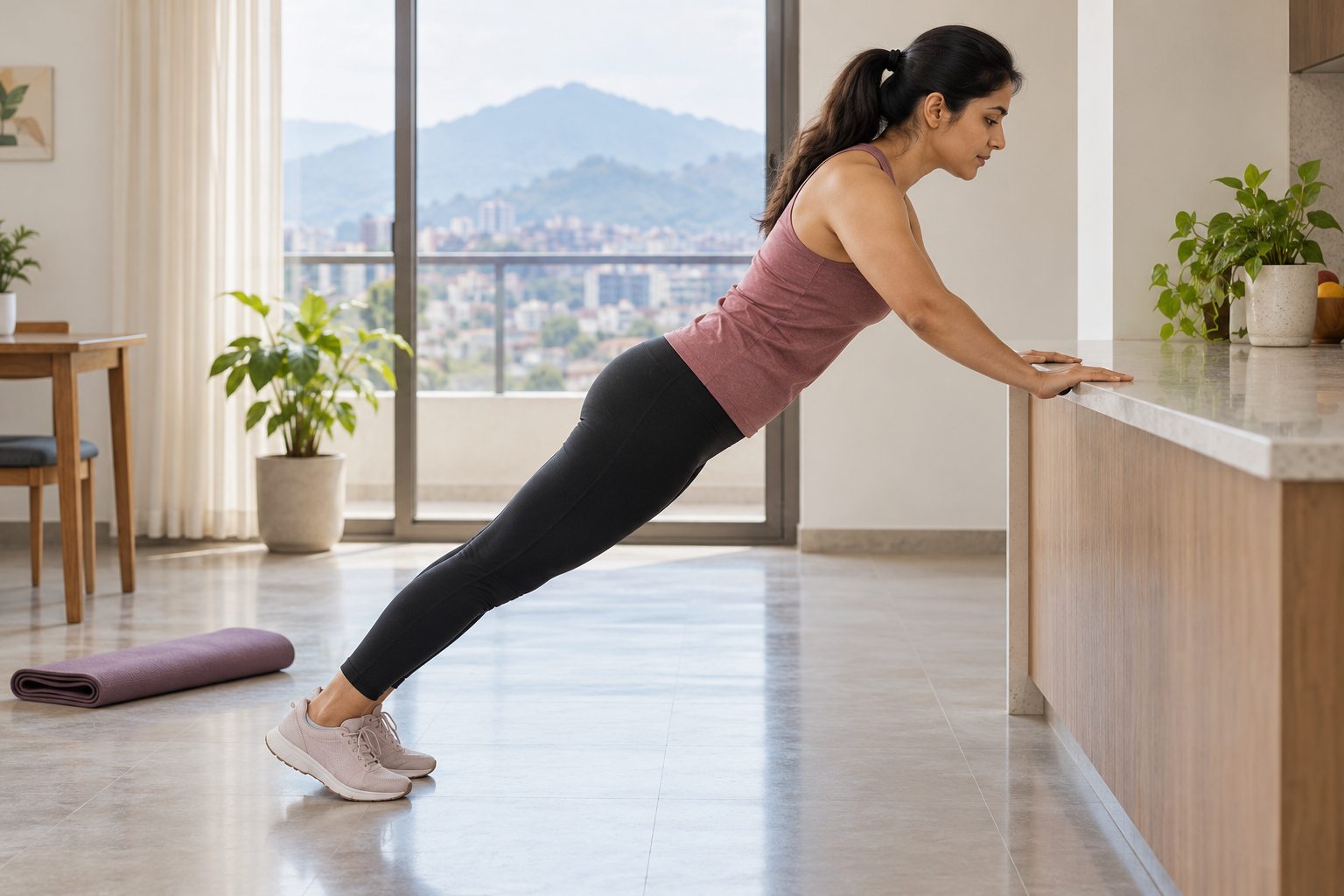
- Wall push-up: try 6–10 repetitions with your body in a comfortable position.
- Glute bridge: try 8–12 repetitions if floor work suits you.
- Supported calf raise: try 8–12 repetitions using a stable support.
- Bird dog or dead bug: practise a few slow repetitions on each side.
Progress without making every session harder
Repeat two or three times a week on non-consecutive days, adjusting to recovery. When an exercise feels comfortable across several sessions, add a few repetitions or choose a slightly harder variation. Change one thing at a time.
Bodyweight routines have limits, especially for pulling strength. If you later add a resistance band or gym sessions, learn safe setup and technique. You can still keep a short home session as your fallback on busy days.
Combine strength work with everyday activity
Add walks, active errands or indoor movement breaks that fit your surroundings. Start below the level that leaves you exhausted and increase gradually. A short session you repeat is useful even when it falls short of a longer-term activity target.
For fat loss, the wider eating and activity pattern matters. Abdominal exercises do not let you choose where fat is lost. Track attendance, easier movement and improved exercise control as well as any body changes; progress does not need to be judged only by the scale.
Sources and further reading
- WHO: Guidelines on Physical Activity and Sedentary Behaviour
- NIDDK: Eating and Physical Activity to Lose or Maintain Weight
General information for adults, not an individual nutrition or training prescription.