
Mass 5 min read
How to Choose a Mass Gainer
What a mass gainer actually is, when you need one, how to read the calories, and the cases where you should not buy it at all.
Published Updated By The Fitness Court

A mass gainer is a straightforward product with an inflated reputation. It is protein powder with a large amount of fast and slow carbohydrate added, usually around 1,000 calories per serving. That is the whole idea, and whether it is right for you depends entirely on whether you can already eat enough calories.
What is actually in a mass gainer
Typically 50–65 g of protein and 150–180 g of carbohydrate per large serving, which works out to around 1,000–1,200 calories. The carbohydrate is usually maltodextrin, sometimes with oat flour or other slower sources mixed in.
It is a genuinely useful product for a specific problem: a person who has repeatedly tried and failed to eat enough food. For everyone else, it is expensive carbohydrate with some protein attached.
The question to ask yourself first
Are you actually struggling to hit your calorie target, or are you struggling to plan meals? Those are completely different problems, and only one of them is solved by a gainer.
If you can cook and simply have not organised yourself, a protein powder plus oats, milk, rice and peanut butter will get you to the same place for a fraction of the cost — and you will actually enjoy eating it more.
What to look for on the label
- Total calories per serving — this is the number that matters, not the serving weight.
- Protein per serving. A gainer with very little protein is just expensive carbohydrate; 40 g or more is a reasonable floor.
- Sugar content. Maltodextrin is fast, which is partly the point, but very high sugar makes it hard to consume daily.
- Serving size and servings per container, so you know what a full tub actually gives you.
How to use it
Most people use one serving post-training or as an extra drink between meals, and adjust from there. Start with half a serving, and increase only if your bodyweight is not moving after two to three weeks of consistent use.
Mix it thinner than you think. Most gainers are mixed too thick to drink consistently, and consistency is the whole point.
How to tell if it is working
The correct measure is the weekly average bodyweight, checked over four weeks, not day to day. Aim for roughly 0.25–0.5% of bodyweight per week. If your weight is climbing and your waist is not, the gain is going where you want it to. If both are climbing at the same rate, reduce the serving.
Alternatives worth trying first
- A protein powder plus oats and milk — same calories, far cheaper, much easier to eat.
- Adding one substantial meal rather than a shake.
- Nuts, avocado and olive oil as calorie-dense whole foods.
- Simply eating a larger portion at two meals instead of five.
Questions.
Is a mass gainer better than eating real food?
How many calories should a mass gainer add per day?
Will a mass gainer make me gain fat?
Can I use a mass gainer on a cut?
What is the best mass gainer brand?
Shop the range
Mass Gainer
Products mentioned in this guide that we currently stock.
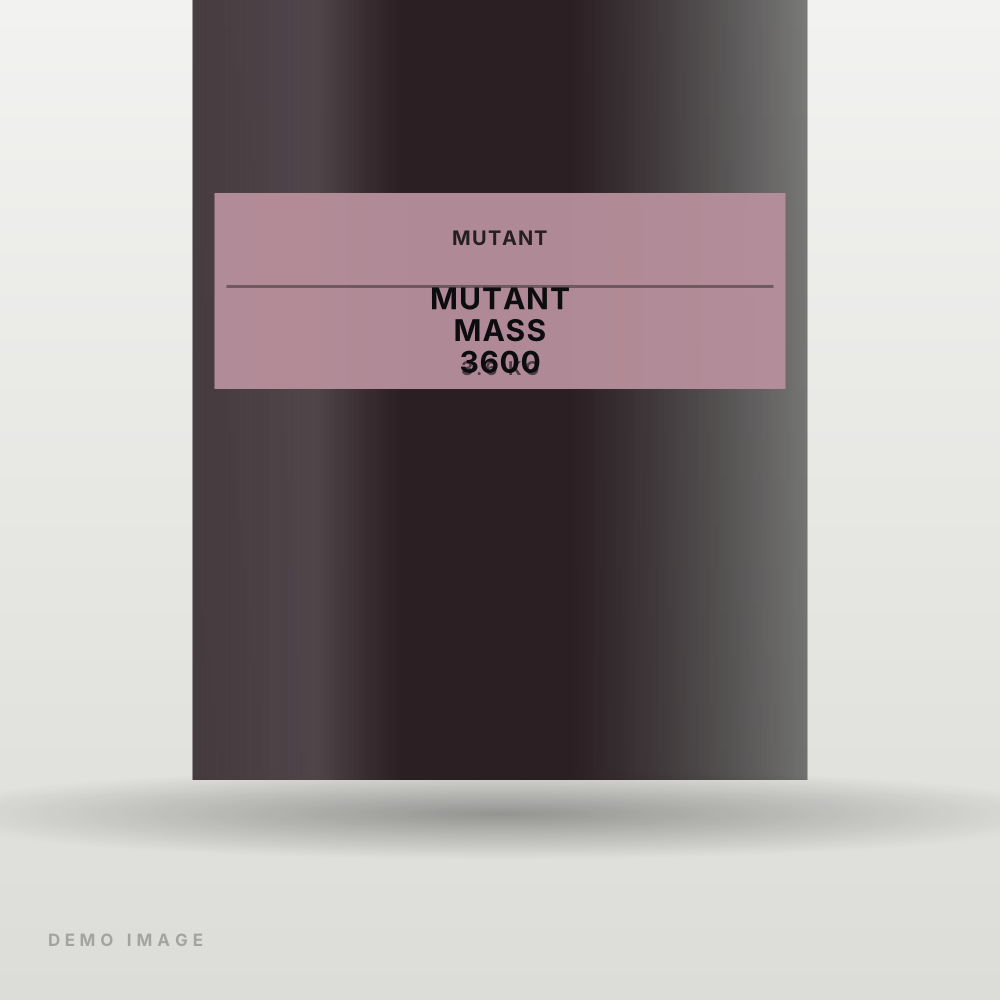
Mutant · Mass Gainer
Mutant Mass 3600
3.6 kg
In stock — order on WhatsApp
Order on WhatsApp
Optimum Nutrition · Mass Gainer
Serious Mass
3.4 kg
In stock — order on WhatsApp
Order on WhatsApp
Optimum Nutrition · Whey Protein
Gold Standard 100% Whey
2.27 kg
In stock — order on WhatsApp
Order on WhatsApp